
Home » Homeschooling in North Carolina
Homeschooling in North Carolina
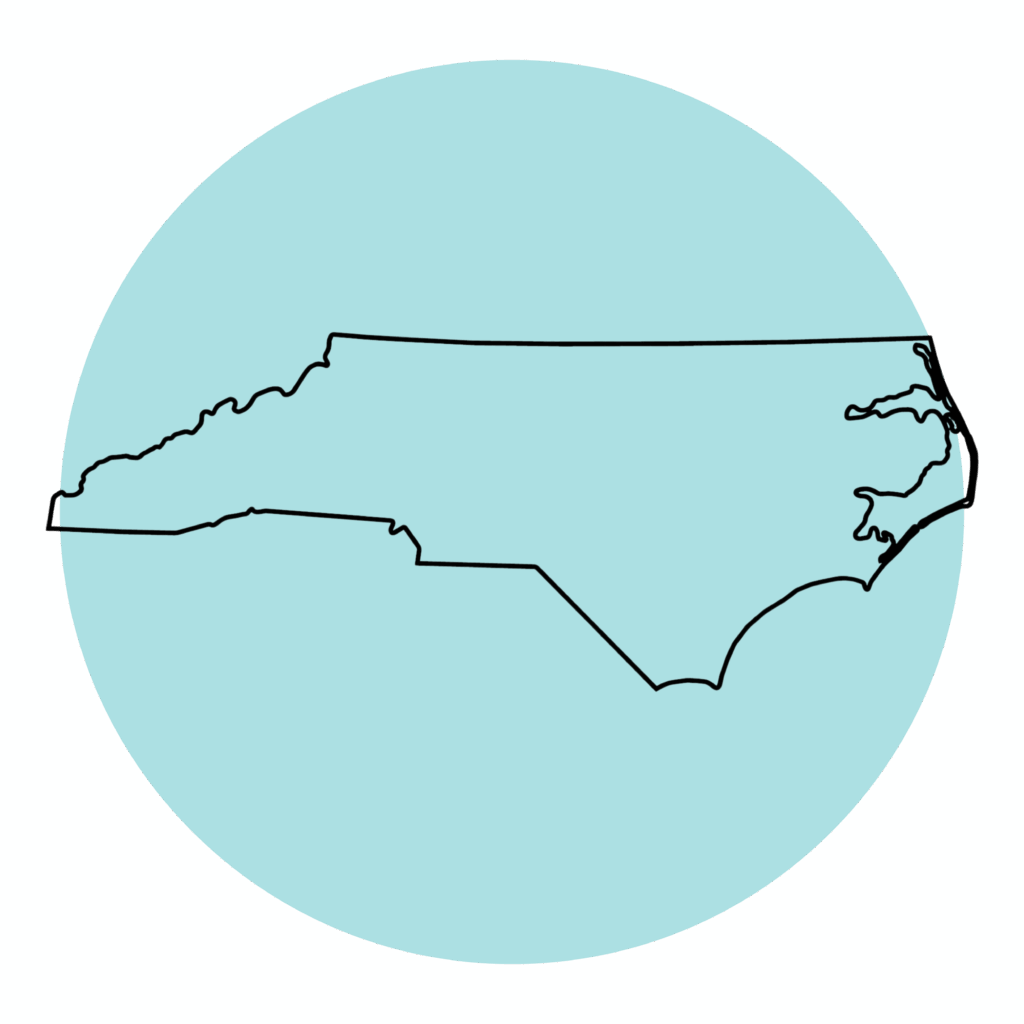
North Carolina is a moderately regulated state for homeschoolers, offering parents two legal options to operate a homeschool. Families must register their homeschool with the Division of Non-Public Education (DNPE), maintain attendance and immunization records, and conduct yearly standardized testing. North Carolina’s approach allows for flexibility in instruction while maintaining state oversight through annual testing and recordkeeping.
Options for Homeschooling in North Carolina
Option #1
Homeschool Under the Division of Non-Public Education (DNPE)
Option #2
Homeschool as a Private School
Option #1
Homeschool Under the Division of Non-Public Education (DNPE)
Option #2
Homeschool as a Private School
Breakdown of Homeschooling Options
Option #1: Homeschool Under the Division of Non-Public Education (DNPE)
Requirements:
Notice of Intent: Submit a one-time Notice of Intent to Operate a Home School to DNPE once the student reaches age 7.
Parental Qualifications: The parent operating the homeschool must have at least a high school diploma or equivalent.
Attendance and Immunization Records: Must be maintained and available for inspection.
Instruction: Must take place on a regular schedule for at least nine months of the year.
Annual Testing: Students must take a nationally standardized achievement test each year in areas including English grammar, reading, spelling, and mathematics. Records of test results must be kept for at least one year.
School Name: Families must name their homeschool; the name cannot be changed once submitted.
Renewal: No annual renewal is required, but the homeschool must notify the DNPE when it closes.
Option #2: Homeschool as a Private School
Requirements:
Rare and complex route. Requires full compliance with private school laws, including maintaining a physical address, offering instruction to multiple students, and complying with all private school regulations (not typically recommended for standard homeschool families).
Law-Related Quick Reference FAQs
Do parents/guardians need to file a form of intent to homeschool in North Carolina?
Yes. A one-time Notice of Intent must be submitted to the DNPE.
Do parents/guardians need to officially withdraw their student from public school In North Carolina?
Yes. You should notify your local public school of your intent to withdraw once your Notice of Intent is acknowledged by DNPE.
Do parents/guardians need a certain level of education to homeschool their children in North Carolina?
Yes. The homeschool administrator must have a high school diploma or equivalent.
What subjects are required to be taught by homeschoolers in North Carolina?
The law does not mandate specific subjects, but annual testing must include English grammar, reading, spelling, and mathematics.
How many hours or days are required to equal a school year in North Carolina?
Instruction must occur on a regular schedule for at least nine calendar months each year.
Are assessments/testing required for homeschoolers in North Carolina?
Yes. A nationally standardized test must be administered annually.
Do reports from testing have to be submitted by homeschoolers in North Carolina?
No. Results must be kept on file for at least one year and made available for inspection upon request.
Does the state of North Carolina require a yearly portfolio for homeschoolers?
No portfolio requirement exists.
Immunization: Is compliance required for homeschoolers in North Carolina?
Yes. Immunization records must be maintained for all students.
Is MAP Growth an approved test in North Carolina?
MAP Growth is not on the DNPE’s pre-approved list, but families may use it if it meets the requirement of a nationally standardized test and covers the required areas. Approval may vary by interpretation.
What level of regulation does North Carolina have for homeschoolers?
Moderate regulation. Requirements include Notice of Intent, annual testing, recordkeeping, and minimum education level for the instructor.
Are there special needs requirements for homeschooling children with disabilities in North Carolina?
No additional requirements. Parents may homeschool children with disabilities but must handle all services independently; public school services are not guaranteed.
Non-Law-Related Quick Reference FAQs
How can North Carolina homeschoolers participate in sports/extracurriculars through a local school?
Access is not guaranteed. Some districts allow participation, but it is up to individual local education agencies (LEAs). Contact your local school board.
What Scholarships and Financial Aid are available for homeschoolers in North Carolina?
Homeschoolers are eligible for most scholarships, including those offered through the NC Education Lottery and community colleges, as long as they meet academic and testing requirements.
Homeschool
North Carolina ESA+
Post-Secondary
NCHE Scholarship Programs
How does North Carolina include homeschoolers in Special Programs or Discounts?
Many local zoos, museums, and community centers offer homeschool days or discounts. Co-ops and support groups are widely available throughout the state.
How many students are homeschooled in North Carolina?
As of the latest data, over 160,000 students are homeschooled in North Carolina, making it one of the highest homeschool populations in the country.
Summary
Homeschooling in North Carolina offers families flexibility while requiring a manageable amount of oversight. With a one-time registration, annual testing, and basic recordkeeping, families can create a tailored learning experience for their children. A strong statewide community and wide access to co-ops and resources make North Carolina a homeschool-friendly state for many families.
Disclaimer
This guide is for general informational purposes only and is not legal advice. Homeschool laws change frequently and may be applied differently by local districts. Please confirm current requirements with your state department of education, local school district, or a licensed attorney.