


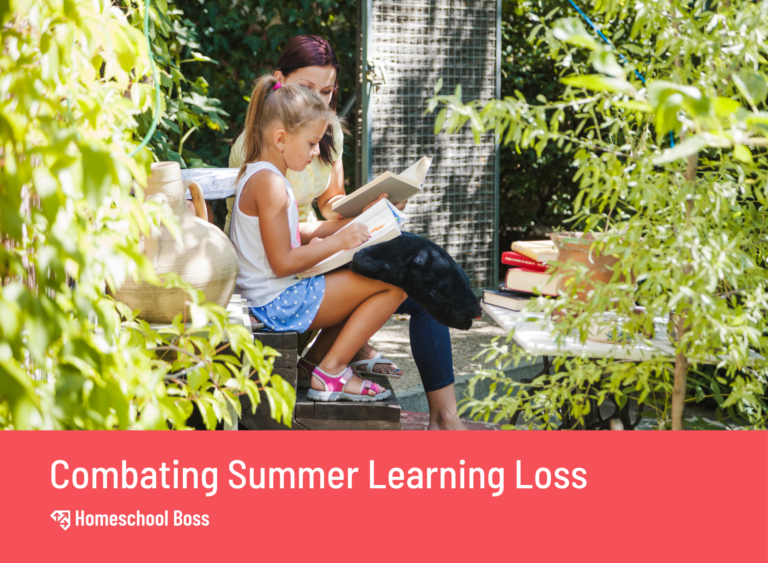
It’s May, which means playing outside, wrapping up your classwork, and Memorial Day being just three short weeks away. It’s official: summer is just around the corner. If you haven’t started your end of year checklist, it might be time to get started!
Summer is especially fun for homeschooling families who have the flexibility to avoid some of the more hectic family attractions that draw public school families, and spending that special time with kids is just that more special when the weather is nice and you don’t have the pressure of 3 short months. But summer break also means student learning loss, which leads to the inevitable frustration and back-to-school pains come fall. In this article we’ll explore learning loss and how to prevent it this summer.
What is Summer Learning Loss?
You may have heard of this phenomenon of loosing academic ground called “summer slide” or “summer setback”. Whatever the name, the result is the same: a real loss of the gains in your student’s comprehension when you return to schooling from an extended break from learning. According to the Brookings Institute, on average, students’ achievement scores declined over summer vacation by one month’s worth of school-year learning, especially in math and reading. Math had a sharper loss compared to reading across race, gender, and age. The story gets worse for older students, who see a more significant decline than younger students.
While there is some debate about the scale of this learning loss (studies indicate it may vary from student to student) what is clear is that students will generally lose some proficiency –especially in math– and high-quality summer supplementation of learning can reduce or even reverse this loss.
How to Prevent Summer Learning Loss:
The first takeaway from a compilation of studies on learning loss is that the best practice in summer intervention is small class sizes and individualized attention. Wait a minute. That’s inherent in homeschooling education! As I’m sure you already see with your own children, individualized learning and smaller educational environments consistently improve student learning outcomes. So, you are already meeting that first important requirement. If you choose to enroll your child in summer programming to combat learning loss, make sure that the program includes reading or math as a part of that structure, and make sure you are looking for programs with small group size in mind.
Here is the second important takeaway: research indicates that for summer programs to be effective, they must be of sufficient duration (at least five weeks long or 70 hours of academic programming). This can be spread out throughout the summer, but studies indicate that less than that amount just isn’t enough time to show an improvement in reading or math to a level that combats summer learning loss.
As homeschoolers we have the flexibility to make education that works for our students throughout the whole year.As you take time to plan for your next academic year, include this summer’s learning in your plan. Is there a way to reach ~70 hours working on math and reading? Taking the time this spring and implementing some structured math and reading lessons this summer will pay off in the fall when your student can confidently jump back into their homeschooling studies.